Updated: August 28, 2026
A few weeks ago, I wanted to re-watch The Dictator, with Sacha Baron Cohen. Perhaps his best work. I loaded the movie on a streaming service, and I noticed its unusual duration. Only 1h 19min. Strange. I distinctly know that I have watched this piece in all its glorious length of 1h 39min. For some reason, someone seems to have decided to prune about 20 minutes of content from this film. Now, technically, it's 20% of a 100min run, which is a lot, but realistically, it's almost 100% of all the funny "controversial" scenes that make The Dictator what it is, for better or worse. The neutered version feels like a parody on some silly fool from a foreign country rather than a witty take on the modern world.
Then, I noticed a similar trend with lots of other comedies. A few seconds here, a few seconds there, the catalog on streaming services differs from hard-copy versions that I know. Small yet meaningful changes. To what end, one might wonder? Add to that the arbitrary decisions by media giants to discontinue parts of their digital catalogs at whim, decisions to restrict or even remove physical media, and you start wondering. I cannot attribute these phenomena to malice or any grand conspiracies, but my observation sure did reinforce my long-standing choice to buy paper books and DVDs as my now-and-future entertainment. Let's talk.
Digital ownership is an oxymoron
I've mentioned this many many times before. You don't own digital content. Plain and simple. But when you buy a nice paper book, it's yours. No one can revoke it, unless we're talking some futuristic Fahrenheit 451 scenario, right. When you buy a song, in say MP3 format, DRM-free of course, it's yours. You can load it onto your phone or computer or whatnot, and it will work and play even if you have no cloud account, no cloud storage, no cloud subscriptions, or no Internet even. When you buy a DVD or a Blu-Ray disc, then the content will be yours, and it will play as long as the optical media does not degrade or gets damaged, but then, this is true for pretty much anything. And depending where you live, you might even be "allowed" to copy the content off the physical media and make your own backups. Yours, for as long as you take good care of it.
There's also the price. Please take a look at my Amazon Fire TV review from 2015. Even then, DVD was cheaper than streaming. Speaking of Star Trek TNG, today, you can buy the entire brand new seven-season DVD or even Blu-Ray set for about 100 dollars (or equivalent). This translates to about 55 cents per episode, cheaper than "buying" digital media on any which platform out there. Try it. Try to buy a digital movie and see what the costs are. I highly doubt you will find anything offered for 55 cents or less. And those 55 cents are forever, so if you watch your content multiple times (which you most likely will), the per-episode cost goes down even further. And the content is yours, forever. You don't need to worry about licensing, or if the content may be removed or discontinued, and you don't even need an Internet connection.
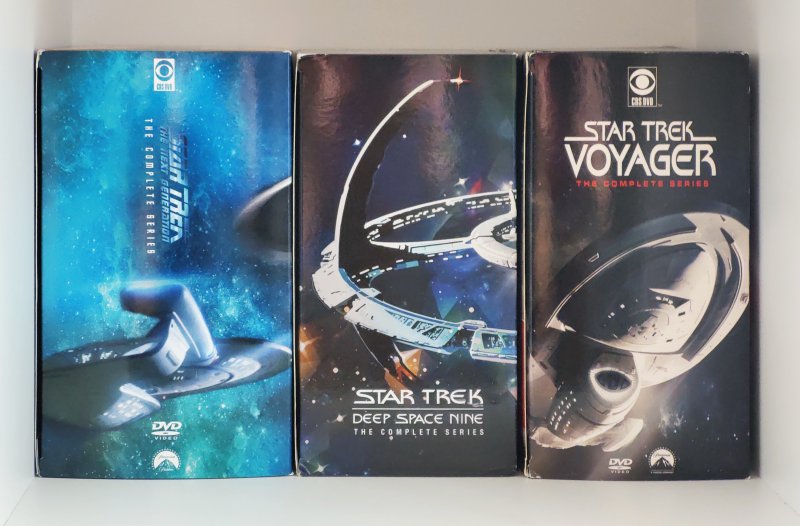
Look at that lovely image. The three fantastic Star Trek series there sum up to 21 seasons, over 500 episodes, each some 45 min in length. If you watch a single episode per day, you're good for a year and a half before repeating yourself. By then, you will probably want to watch that stuff again anyway. Throw in a dozen other series into the mix, and you're good for years and years of fun.
Now, don't get me wrong. I do pay a subscription for streaming. I enjoy lots of nice content this way. I've also discovered a lot of great content in this manner, including foreign films and shows that I wouldn't necessarily find otherwise. I am happy and grateful for that, which is why I happily pay the monthly fee.
If I average over all of the different materials that I watch in any given month, the subscription fees translate to a lower per-film or per-episode cost. That is correct. But, if I decide to stop my subscription, I will never be able to watch the content again. It will all be gone. Also, occasionally, the streaming services remove content, as often as they add it. Sometimes, this sadly happens midway through a long series, and you never manage to finish it.
The streaming is a good thing, but it only pays off if you keep it ... well, forever, and you don't mind the transient nature of the service. And so if you want to do fancy ownership calculations, you probably need to sum up all your watching over the next 50 or 60 years. It's not trivial mathematics, that. All in all, though, the streaming is a cool thing. But then, you also find a familiar favorite, you start watching it, and very quickly, you realize that it's not the original you expected to see. And that pisses me off most majorly.
Soft, subtle alteration of the history
What makes digital content, and edited digital content in particular, so "dangerous" is that it allows pretty much anyone, at a whim, to change information to the tune of whatever they like or don't like. It's very easy to do, too. Snipping media files is a quick process. Anyone with an inkling of knowledge with ffmpeg can make any sort of cut or edit as they want. The same applies to movies, music, books, you name it. A file is a file.
In the last decade, I've noticed more and more examples of this "behavior". For whatever reason, from political agenda to hot disagreement on what classifies as appropriate at any given point in space and time to cultural differences and cultural egocentrism to pure and simple differences in taste, companies offering digital content are playing judge at what the plebs should see. They make changes to the original work. Why or how does not matter. What matters is that once you edit a piece of digital material, you make it the new and de-facto truth. The old one might as well be gone, which is not the case with physical content.
Imagine any which book or film out there. Imagine controversial content, or historical ideas that no longer resonate with certain crowds. Old physical media thereof serves as historical proof of what people thought and did. Again, for better or worse. You don't need to like or agree with certain concepts, but past work serves as a counterbalance to whatever we do or think today. We cannot calibrate our moral compass without knowing what humanity did over the past few thousands of years. From Babylon via Prussia to contemporary world, the documented decisions and choices of past leaders, philosophers and artists allow us a glimpse into the psyche of our ancestors, and allow us to modulate our own behaviors accordingly. Without their knowledge, without a record of that knowledge, without the lessons of the past, anything we do today has no meaning other than whatever we imagine at the moment, whatever suits our fancy.
For example, imagine a world where Oliver Cromwell or Napoleon Bonaparte do not exist in history books, because they have been removed because someone didn't like them. How would you then reason the history of the British Isles without Cromwell? How do you explain Belgium or the Partitions of Poland or even the end of the Roman Empire without Napoleon? Do you understand what I'm trying to say?
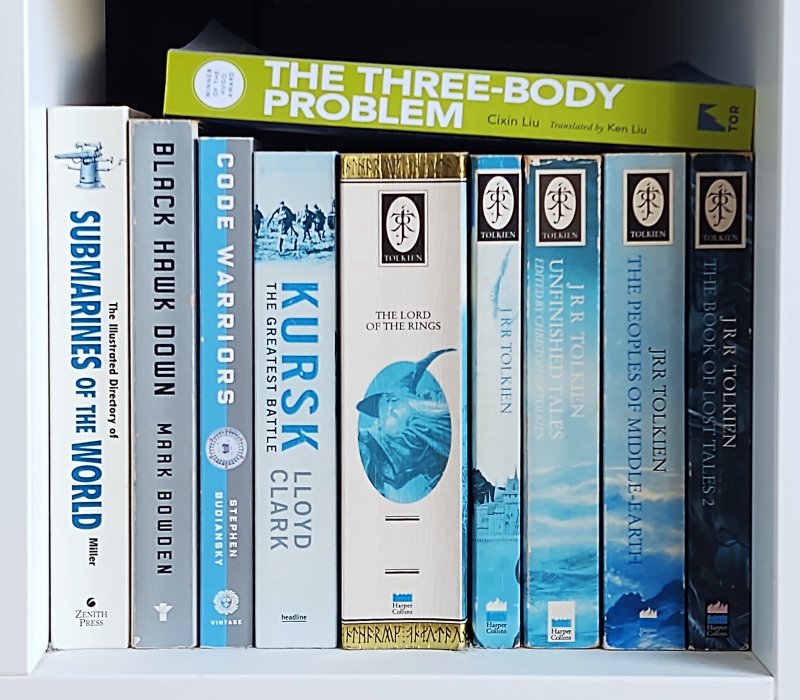
Look at those lovely books. Some of them are over 30 years old, and yet, they are in perfect condition. They need no battery charge, they have no subscription, they won't suddenly stop working, and you can read them as often as you like, or even loan them to your friends and family. A modern-day sacrilege.
But the changes do not need to be drastic. A word here, a word there. A scene here, a scene there. Over time, and a sufficient number of tiny, barely perceptible or noticeable iterations, you can weave a different version of past events (truths or facts or whatever you want to call them). You don't like a word? Remove any scene that mentions it. You don't like a theme? Erase any page that has it. End result, you're left with a sterile, milquetoast version of the reality. For people who have no prior knowledge of certain information, the new version will be THE version. And therein lies the frightening future that is slowly encroaching upon us. Once all the data becomes digital, the world will lose meaning. It will become a virtual reality. For real.
This sort of change cannot be done with physical content ... It's very easy to alter the one copy of a film streamed on a platform. It's impossible, or near impossible to do with say a million copies of DVD sold across say 200 territories and now in private possession of individuals all over the planet.
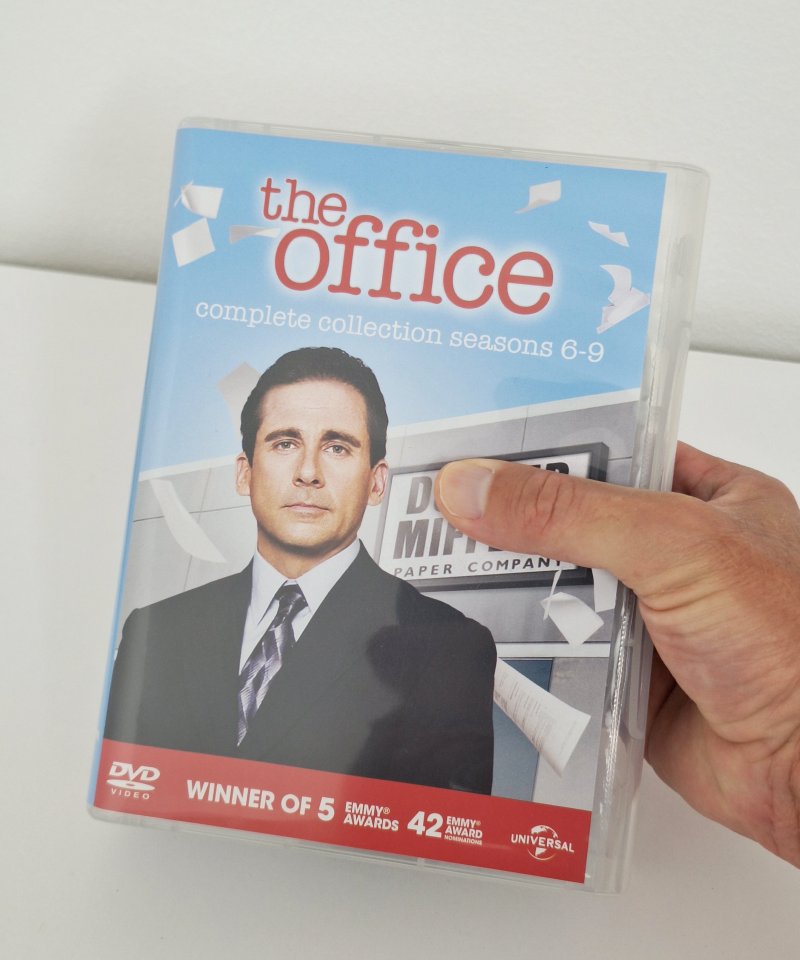
You know what, I'm gonna buy physical media even harder!
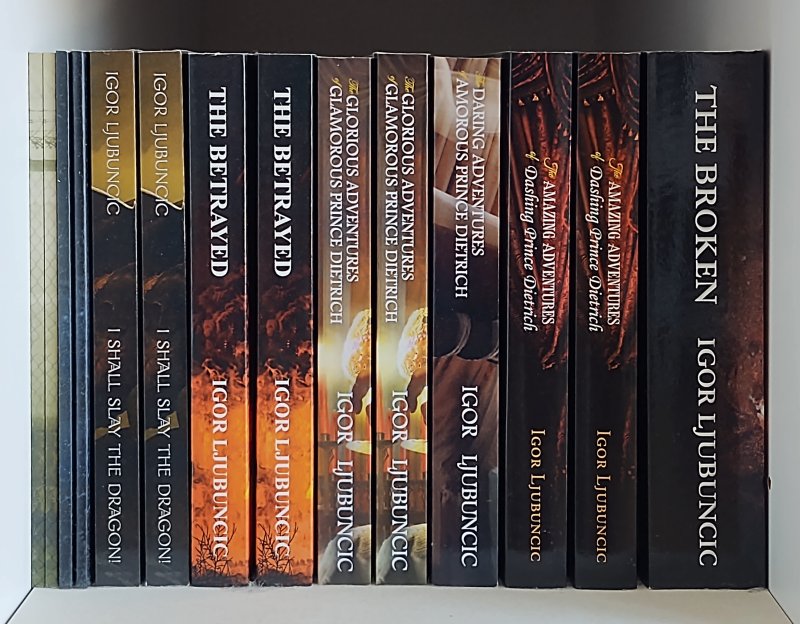
Printed soft and hard copies of books are immutable, and what they carry is like the cosmic background radiation, a precious view unto the past, how things were, good and bad and stupid and brilliant, all of it. Books also don't need a battery charge, and they work fine even after 40 or 60 years. I still have encyclopedia from my childhood, printed back in the 60s and 70s and such. I'm proud to say that both by volume and weight, most of my worldly possessions are books, many many hundreds of them. Books also smell nice, did I mention that? But then, you read about certain companies buying books in bulk and shredding them for AI training ... Oh, the humanity. Right.
Conclusion
I do not want to sound like some hermit, shunning modern conveniences and pining for the good ole days. Nope. But I'm keenly aware that there's a continuous, long-standing effort to make this world more digital, more subscription-based. It's everywhere, software and computer games included. I can name at least a dozen examples of rather excellent programs that used to come with perpetual licenses, but no longer. And as soon as that happened, I stopped being a customer. No need to repeat myself, you can find all this in my past articles, original, unaltered content, hi hi.
Subscriptions have their place, of course. For services, yes. For products, nope. This is why I've always insisted on DRM-free music, physical books and DVDs and such. In fact, considering where the world is heading, and with the would-be AI diarrhea repainting the planet in all shades of brown, I would most warmly recommend you stock on up on your physical goodies. Within your means, go get your DVDs and Blu-Rays and physical books. You might even find some amazing second-hand deals, especially with people who do not understand the value of physical ownership and are keen to get rid of the old stuff. Speaking of books, they mentioned this sort of thing. Grab your 1984, grab your Fahrenheit 451, and enjoy your Brave New World. Olala, see what I did there? Truly, stick to your old tomes, they may yet prove to be valuable historical artifacts.
Cheers.