Updated: November 20, 2026
Ah, don't you love it. Every few years, buzzword-happy, MBA-toting executives come up with some new slogan meant to "inspire" the masses. Once upon a time, it was anything Year 2000, then it became anything dot com, then we got the Internet of Things, then Web 3.0, and now the chatbot revolution AKA anthropomorphic AI. But the thing is, in this short span of only about forty years, the humanoid ape hasn't genetically changed one bit. It's still the caveman this, caveman that. Plus security vulnerabilities, as the cherry on top.
What am I trying to say? Well, if you haven't noticed, the pundits that be would like us all to relinquish our lives into their able and empathetic control, give up our possessions for stress-free subscriptions, let AI be our ever-helpful assistants, and basically, y'know, it's gonna be Star Trek. Except, it's not. So far, we're mostly engaged in a rather bleak reality, an IT security circus that is only getting worse. All right, 'tis Star Trek, 21st century, to be fair. Now, the one nice thing about the past, and not even so distant past, is that it can teach us a lot about how we ought to weather our rough present and the uncertain future. Ah, here, trust me, you don't need to be a wizard prognosticator to see where things are headed. The digital future is nonsense.

Note: Image taken from Wikimedia, licensed under CC BY-SA 4.0.

The past
About fifteen years ago, the Internet of Things (IoT) was the thing everyone talked about. A hype that could not live up to its promise. Oh, but we were promised smart devices that would anticipate our needs and wishes. We would have groceries show up on our doorstep without us doing anything, because the fridge would know what needs replenishing. Helpful robots would sweep and clean. Our wrist watch would keep all our appointments, reminding us where we need to be in our hectic, jetsetting lives, plus monitor our sleep so we could "hack" our bio clock. All of this and more so we could be freer to a) do more productive work b) have more leisure time.
Let's ignore for a moment the utterly delusional design of this would-be Utopia, based on a narrow interpretation of the world (basically California), workaholic premises, misguided intentions, or deliberate misunderstanding of the human psyche (and nature). Let's ignore those for a moment. The concept of IoT was one giant interconnected world, happily communicating and cooperating. After all, if it worked for the Internet, why shouldn't it work for the, eh, Things?
Oh, let's add industrials into the mix, too. Why not, right?
The present
First, it didn't work for the Internet. Or, it did, briefly, until social media came around and ruined everything, turning a techie playground of innovation into a morass of greed. Fast forward fifteen years, the current state of affairs is sad and ridiculous. Every day, every single bloody day, you read yet another news piece or report or bulletin or disclosure about some company getting pwned or hacked or both, followed by a corpo-template mi-scusi "we take security seriously". Every day.
Take your pick. Post offices getting pwned? Check. Schools? Lower and higher education! How about "connected" fridges being brought to boil? Actually, more than once? You got it, sir! What about websites? Old news. Unattended cloud buckets? C'mon, that's ancient news. All right, airports, perhaps? Oh, yes please, I'll have a dozen! Or perhaps, how about every single flight being grounded for an entire day? Power plants, you don't say? You bet your top talent (Roman currency, not actual talent), right there. Next on the menu, how about governmental registries of citizens and alike? Of course, why not indeed. And the list goes on and on and on and on and on. The list is endless and sad.
And since I wrote this article, still more stuff happened. I had to go back and edit this piece, and add yet more examples. For instance, how about a big, juicy global cloud outage resulting in mail not working for an entire day, plus tons of unrelated services going down, because of myriad badly mapped dependencies. Grab your favorite news paper, or go to your favorite news site, and just read about the latest round of major, serious, ultra-disruptive foobars.
Speaking of websites and news, here's another wee incident for you. A lot of prominent sites serving "A/B testing" versions of their pages also accidentally served malware through a third-party script running alongside their main content. It just proves that you can't beat physics. There are no shortcuts in life. If it takes 50 joules to serve two versions of a site, then it takes 50 joules. Either you let your own in-house Web developers do it, with full control and knowledge of what ought to be, or you "outsource" it to some third-party entity that will do it for you, with all the entailed risks of trust and control that such an action brings.
It also highlights the importance of everything I outlined in my article on modern security, plus if you use the likes of Noscript, and selectively allowed or even just disabled unnecessary Javascript nonsense, you wouldn't need to worry about this problem. Likewise, if you use the indispensable UBlock Origin (UBO) adblocker, you would have more peace and quiet in your digital life. Do I feel vindicated? Not at all, because we all suffer because of this circus. And please tell me, how did interconnectedness help make our world better, smarter, more resilient to crises? Where does the good part come in?
So what's happening, you ask? Well, it's quite simple. Let me explain:
- Theory: IoT was promised to connect us (whatever that means). Reality: Every IoT implementation comes with its own proprietary crap managed by a crap app. There's no interconnectedness, only tightly guarded silos, designed to lock the user in for'ver more. Basically, this is subscription Golgotha for the plebs. Add industrial systems into the mix, because hype delirium and cost cutting.
- Theory: IoT was supposed to be robust, built on a magic carpet of APIs and micro-services. Reality: Security is a costly afterthought, and all you have is a bunch of outdated crap that never gets updated, with lax defaults, easily guessable passwords, backdoors, and then some. How it works? Usually, you have the aforementioned MBA-loving executives tripping on their own egos. Then, some grumpy techie comes forth and says how the design is imbecilic and needs refining, or else the whole thing would get hax0red all too soon. The executive then puts the rebellious worker on a performance improvement plan, the so-called PIP, the kangaroo court to keep the plebs meek. The armada of yesmen happily obliges, and you get a flood of turd de la creme "products" coming out.
- Theory: IoT was supposed to improve people's everyday life. Reality: It does not. You merely get spied on, with ads lobbed into the equation as a special bonus. This is in the best case, because usually the IoT devices work against you, breaking down when they lose their precious cloud connection, or they end up being used in botnets, plus they cost way more money than anyone expected.
- Theory: IoT was meant to commodify the world of gadgets. Reality: The prices go brrrr.
Now, you could ask why, why, WHY this be our grim reality? Can't we do better? The answer is utterly simple:
- Cheapness as a Service.
- A fat stratum of yesmen middle management.
- The simple fact the world is a wee bigger than California.
- Consumer nonsense creeps into the industry space. Chaos ensues.
- No need for any big conspiracy theories. Incompetence suffices.
And there you go, that's it. QED. Q.E.D.
Now, now, now, now, you could say, Dedo, you are looking at the past with rose-tinted glasses! Things are far more reliable today than they were two decades back! Well, perhaps. The so-called 99.99% uptime nonsense metric and such. Yes, things used to break. A lot. The big difference is, back in the day, when things broke, they broke locally. The issues were usually contained by their very nature of physical and digital isolation. Every vendor broke only itself, and a little. One's incompetence didn't need to become a global problem! Perhaps this is the true meaning of interconnectedness! You suffer on behalf of everyone's subpar work!
Today, issues propagate as far as the wires will carry them, which means that the resilience and redundancy of distributed cloud systems gets voided by the very fact those distributed systems are all so tightly connected. It's a paradox, but there you go.
The future
So what will happen when even more things go digital, including perhaps money? The answer is simple, too! The answer is total chaos. In fact, there won't be any need for big physical wars, because the potential fallout of cyber-security incidents will become so massive, so disruptive, there won't be any need for gritty conventional warfare. Why spend so much effort and risk lives sending troops to a war zone when your enemies will willingly trip themselves by exposing all their critical infrastructure to the Web, where it can be easily demolished?
Now, look, perhaps you're more optimistic than me. Perhaps your fridge won't stop working when its certificates expire. Perhaps your washing machine or your coffee machine won't hammer the access point with 1 TB of pointless telemetry data. Perhaps this or that vendor won't suddenly remove features to your smart speakers. Or maybe they won't prematurely EOL the device, or add yet another tier of subscription for the eager peasants. Maybe your local water treatment facility won't seize, and your bank won't be crippled by an attack. Maybe your car won't be remotely accessible, hihi. Maybe none of this will ever happen.
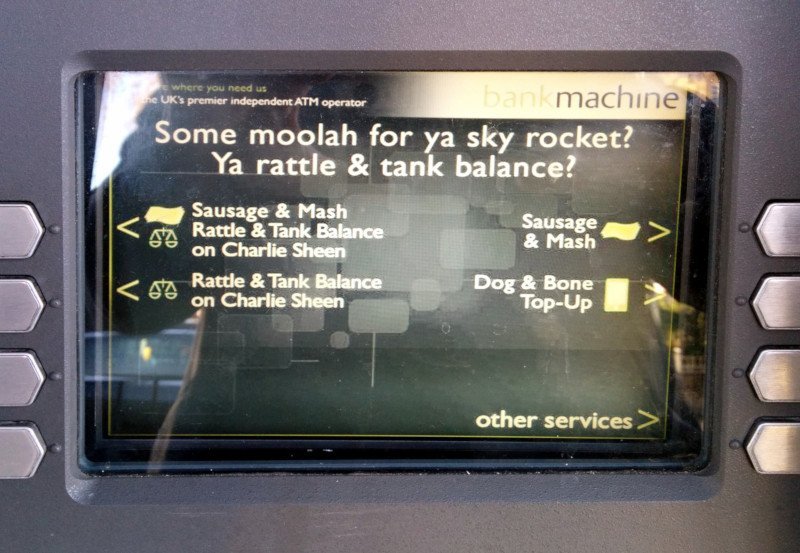
Note: Image taken from Wikimedia, licensed under CC BY-SA 2.0.

But ... it is happening, all the time, unfortunately. And the more digital we go, the more it will happen, times ten, times one hundred. The future world will become one giant silly hackfest. It will become unsustainable, economically, socially.
Then, side by side, there's the usual fuzzy future dreaming and denial of reality. With AI tooling being rolled out unto the masses, we are once again being told the same old stories: the economy of scale (is token cost going up or down, pray tell), "value" (enterprises included), quality, more free time, blah blah blah. Time and again, the same fiction is being sold in fresh new packaging. Somehow, AI chatbots will revolutionize our lives, it seems, but when you ask "how exactly", you only get the usual handwaving nonsense, or perhaps another juicy story of AI agents going rogue. But if you voice a negative opinion, you're a skeptic, a dinosaur. In your defense, all you need to do is look back, at the troves and troves of leaked data that show where we are with the current generation of technology, or perhaps you can go through the day's news and its bouquet of security incidents, to see what the future holds. Now, don't get me wrong. AI has many merits, and I will talk about it in a separate article. But what we have right now isn't it, whatever it it is.
Security is expensive
Actually it comes down to money. Or rather, security. But money.
IT security costs money. Lots of it. And security usually runs counter to the user experience, hence counter to profits. And this is where it all falls apart. We go back to cheapness. In physics, if you want to budge a system out of its minimal energy state, you need to invest energy into the system. Hence, without investment in security, the current state of affairs won't improve. In fact, it will get worse, as yet more and more services become dependent on the fragile scaffolding of badly designed cloud, AI and buzzwords.
After all, if the executives and their head-nodding posses are unable to make the existing products secure and robust, why do you think they would or will be able to do that with the new generation of stuff? If someone made a shitty IoT product, how are they going to make a non-shitty AI-flavored product? Where exactly is the reckoning, the eureka moment, the change? If all that counts is making things cheap, then that will always be the lowest common denominator.

Not everything needs to be "smart" or "online". Especially not important everyday things.
Note: Image taken from Wikimedia, licensed under CC BY-SA 4.0.

Look around you. How did outsourcing, offshoring, vibe coding, or any which fad you choose make the world better, smarter or more secure? Please show me. Is hardware more durable than it was? No. Is software of higher quality than it was? No. Is anything, in the mainstream commercial space, really "better" than it was about a decade ago? Where's the hard data that shows improvements?
How did connecting critical infrastructure onto the Web make things better? Please, enlighten me. All you get is constant hacking and breaches, left and right, because incompetent managers promote incompetent policies based on the cheapness factor. And that's the thing. We don't need any important service online. We truly don't. Thirty years ago, there was virtually no online infrastructure. And yet, we had electricity and water and television, and it all worked fine. I'm not saying we need to go back to the "good old days", but perhaps critical infrastructure needs to be treated as such, and that means actual people worked in actual air-gapped environments. C'est la vie.
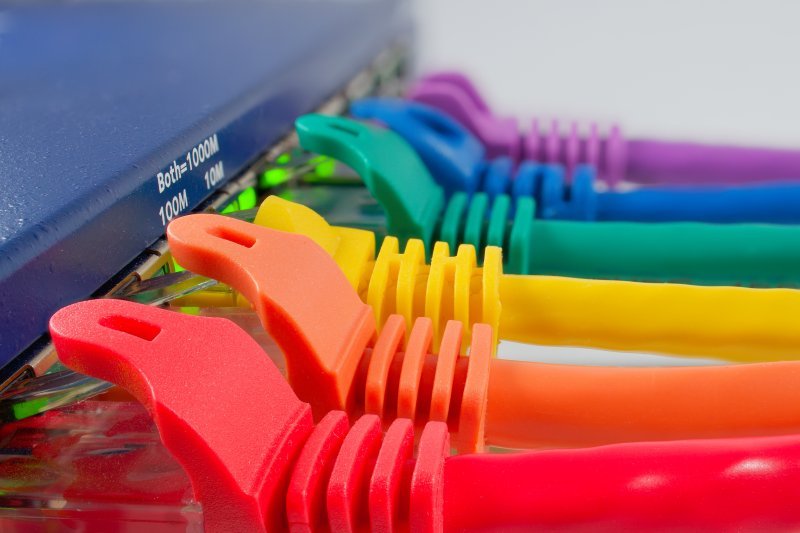
Unplug those cables, and enjoy serenity.
Note: Image taken from Wikimedia, licensed under CC BY-SA 4.0.

Alas, having people actually out there, working in the field, costs money. You need to pay people honest wages to do serious work, you need to pay for their travel and food. Instead, you give them a badly-secured VPN endpoint and let them manage stuff "remotely", because it's cheaper! That's the only thing that seems to count. The lowest common denominator. Now you have infrastructure never designed to be reachable over the Web, outdated security models that do not work in hostile environments, clueless people ill-suited for the task all along the chain, plus demoralized IT security teams with little to no budget. Hilarity ensues.
This time, it ought to be different, right? Well.
Conclusion
Critical infrastructure does not belong online. Repeat after me. It simply makes no sense that anyone anywhere can reach the backbone of important facilities, using mere copper wires and optical cables as their entry point. Think about it! Vital institutions have tons and tons of physical security. Gates, fences, ID checks, blah blah. And then, side by side with this 1990s movie circus, you have badly secured Web services that anyone can access anywhere on the globe. Where's the logic? How does that help any which country maintain their critical infrastructure integrity?
Please read some of the articles linked earlier. For me, the absurdest [sic] of them all is indignant people unable to pay for food because they don't carry cash. Huh. Did I mention this very example in my Digital Dystopia article? I did. Has it happened? Yup, time and time again. And it will get worse! If we continue on this pointless trajectory, it will become so costly that countries will have no choice but to forcefully disconnect themselves from the Web. And the thing is, the reality does not have to a binary 0-1 choice. We can have and enjoy digital conveniences. But they can only exist and work if there's a super-robust analog backbone. What we cannot have is a sci-fi future. It will take centuries, perhaps millennia, if ever, for the human psyche to change so we all live in one giant and peaceful unaffiliated Trekkie harmony. Until then, the digital model cannot survive against the harsh reality of cyber wars. As it happens, the sci-fi genre is rich on global planetary unities, but very poor on IT security incidents. Hence, fiction.
The best thing is, as an ordinary human bearing the brunt of all this nonsense, you actually have a say. Simply say no. Don't let your world become one ephemeral blob of digital code. As long as our bodies need to ingest actual physical fuel, and we need physical shelter and autonomy and such, the economy must largely stay analog. The all-digital concept is nothing more than a silly, naive, deluded vaporware nightmare.
Note: Thumbnail image on the index page, from Wikimedia, licensed under CC BY-SA 4.0.

Cheers.