Updated: June 12, 2026
Today, I would like to talk to you about a computer game that's more than 30 years old. A lovely flight simulator, from the truly golden era of gaming. A game that was huge for its time, with some six floppy disks needed for the installation. Wonderful. Anyway, 1942: PAW lets you strap yourself into the cockpit of several fighter planes, dive bombers or torpedo bombers, should you fancy a challenge, and recreate the terrifying glory of the Pacific war theater, flying either as an American or an Imperial Japanese aviator in WW2.
If this topic sounds familiar, it is because I've already reviewed this game in 2007. But then, a burst of nostalgia hit me recently, and I decided to try my luck yet again. Long story short, I'm writing this review some nine completed tours of duty later, three each as the Army fighter pilot for both sides, two as the Zero pilot for the IJN, and one more for the US Navy. The time hasn't eroded the fun. If you care about these sentimental kind of reviews, join me for a quick article.
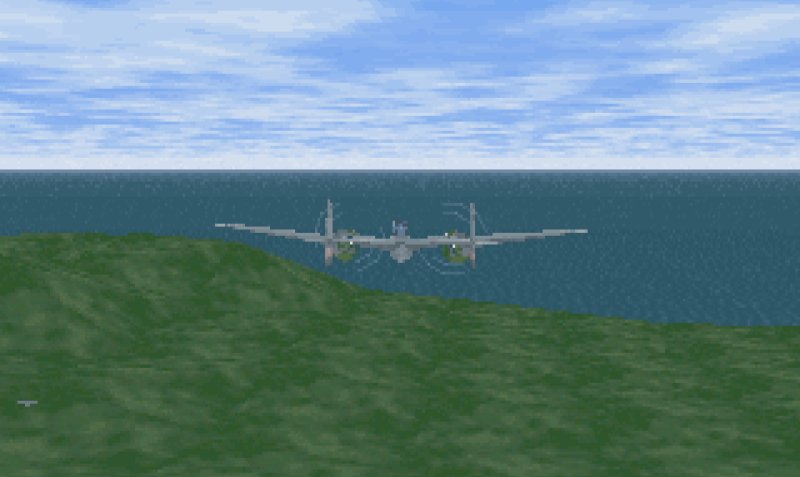
The challenge ... before even taking off
The funniest part of the whole endeavor is that I faced tons of problems with the game's playback in DOSBox, more than I did 17 years earlier. Yes, it sounds funny, perhaps even tragic. But eventually, I did manage to fix all these issues, leading to a set of four lovely tutorials, one and two on performance, and one and two on sound. With the technical difficulties sorted out, I embarked on my journey. Campaign after campaign, testing my skills against the wicked and eternal wisdom of the 1990s MicroProse developers.
The variety
If you think flying an ancient flight simulator would be boring, think again. First, in the original game, you could choose your career either as a fighter, dive bomber or torpedo bomber pilot for either side. Each track offers two distinct paths, as in, you won't be offered the same starting point or quite the same missions. Yes, there is some overlap, and one of the paths may be easier or not, but this already gives you twelve options, with 30 missions needed for successful retirement (unless you get shot down or killed, or you accidentally shoot down two friendly planes).
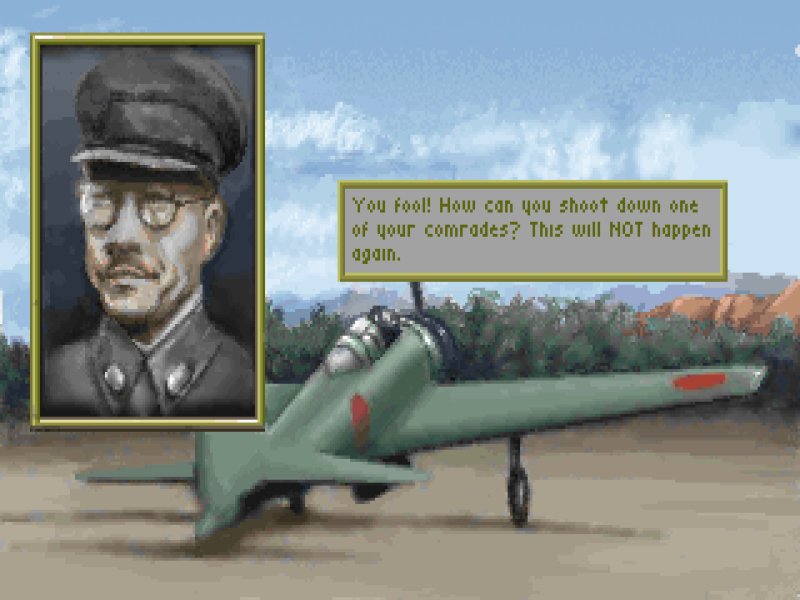
A quick way to end your career. In my latest endeavor, I did manage to disqualify myself once, as a Japanese pilot. I also had two friendly shootings flying American planes.
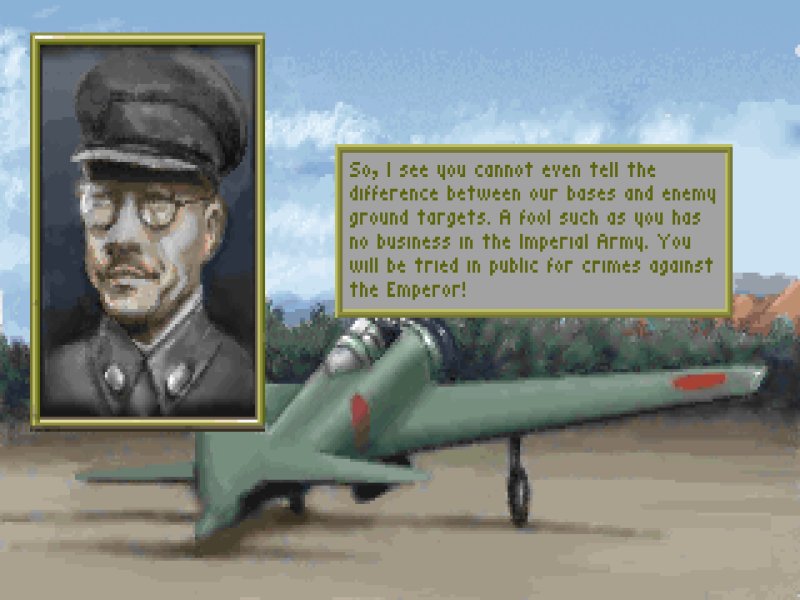
And it's over ...
Then, there's the expansion pack - the GOLD edition, which also introduced Army planes - P38, P40 and P51 for the Americans, and Tony, Frank and George for the Japanese. For some odd reason, I thought you could fly the P39 AiraCobra too (I was soo looking forward to firing the massive 37mm cannon), but no. That's NPC only.
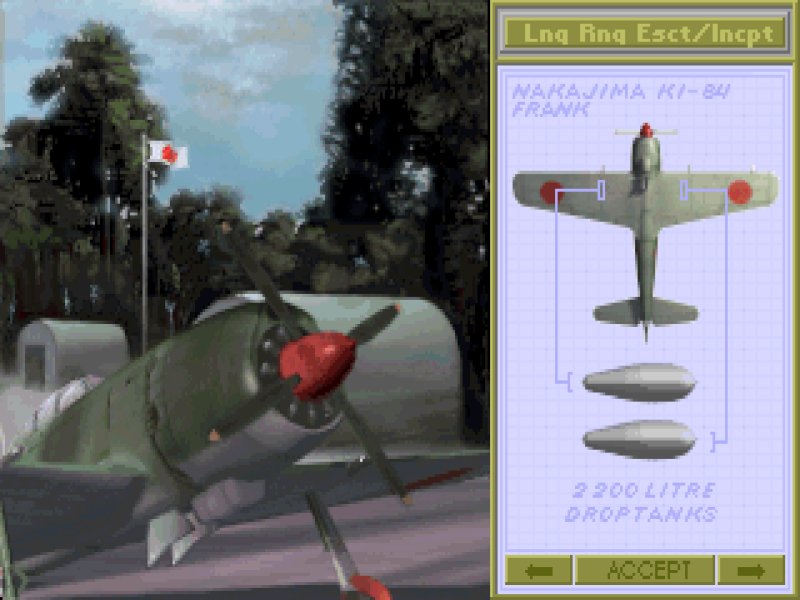
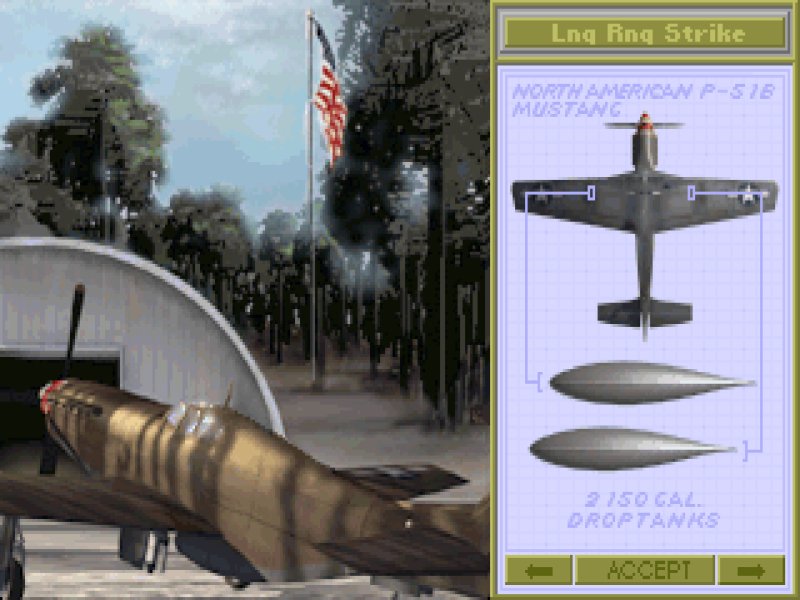
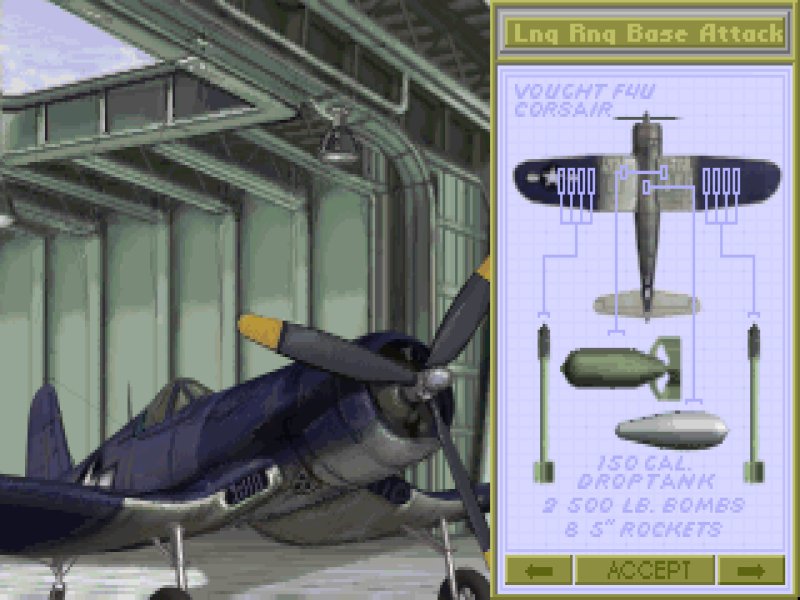
Lots of planes, lots of nice configurations.
There are no bombers here, but you get as many as three distinct career paths. With the Americans, you will get assigned either the Lightning or the Warhawk (two different careers). With the Japanese, you can start with any one of the three planes. Along the way, you may even end up flying the Zero, as you get reassigned to different squadrons in different theaters. Similarly, with the American Army pilot careers, you will get to switch and fly the other planes, similar to the F4F - F4U - F6F progression in the original Navy set. On its own, this means you get an additional set of six career options. If you try any one only once, that's 540 missions, of which at least half are unique per selected track.
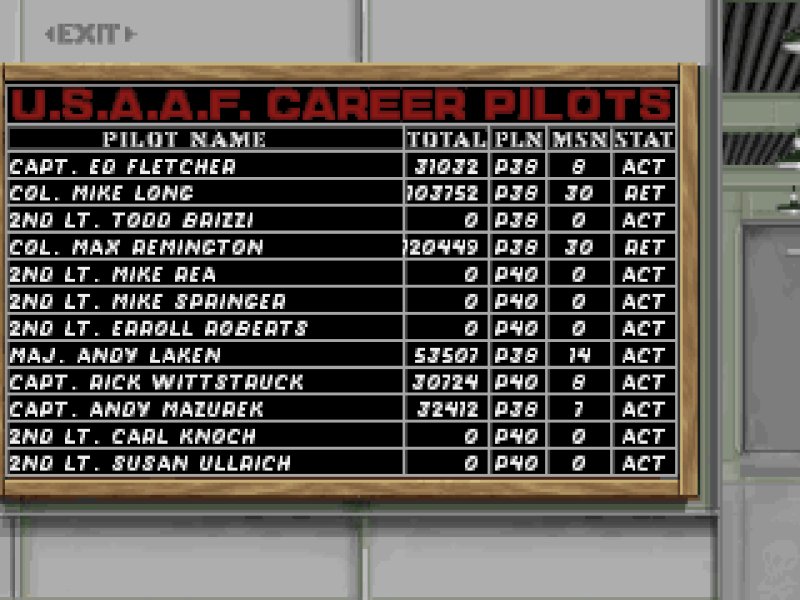
Keepin' it real.
The frustration
As I began flying, I realized I was a little rusty. Modern computing also presented its challenges. With the DOSBox, you can resize the main interface (and the games), but you can't really "sharpen" the in-game resolution that much. So I ended up sometimes turning off the various textures, like the sky or the ground to actually be able to see the enemy planes as more than just random dots or lines. Looking at my own combat action videos I recorded in 2007 for the article linked above, in some ways, it feels that things were "better" back then. Even so, I was able to complete a whole bunch of campaigns, with some rather fancy results in the Hall of Fame.
Like most 90s games, 1942 can be as easy or as hard to play as you want it to be. Essentially, here, you can even turn off collision damage, or the ground impact, which can make for a rather relaxed flying. Or, you may choose realistic flying (where your wings might tear off if you exceed the maximum allowed velocity in a dive), or limited ammo, which means you will probably only shoot down one or two planes before running out. The difficulty level, from 1 to 3 is used as the points multiplier for your missions. In other words, the harder you set it, the more likely you are to get medals. I figured the only thing I needed to be off is ammo, allowing me unlimited fun. The rest I turned on, which meant hard, gritty, uncompromising fun. Sometimes, too hard.
I have to admit, I collided with enemy planes more than once, so I would hurriedly quit DOSBox before the mission got recorded and I ended up KIA in the pilot roster. Sometimes, it wouldn't even be my fault. But yeah, realistically, I probably "died" at least a dozen times in my recent playing spree. Well, more like 30-40.
The glitches
I also discovered a lot of little problems. Perhaps I was oblivious to these in the past, or perhaps I forgot. There are a few missions where your plane is supposed to take off (from the ground), but it actually spawns mid-air halfway to the objective, with zero speed and the engine on idle. You then need to quickly rev up and gain airspeed, and then, you can continue on to your mission. But in these situations, your wingmen will usually crash.
Similarly, one of the missions has a cruise altitude set too low, so you will end up ramming your plane into one of the Papua New Guinea's mountains unless you manually change it. Another mission has no map. Just empty sea with no markers. You need to simply fly on autopilot and hope for the best.
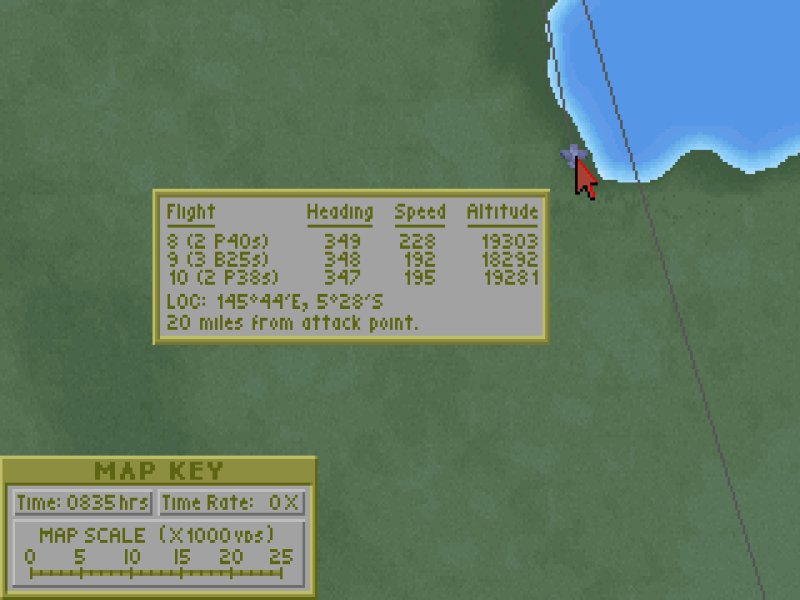
Watch that altitude, sir. You don't wanna be crashing into any mountains, do ya?
If you score "too much" in a given mission, as each hit is listed on a separate line, the post-mission briefing may show empty on the chalkboard, but at least you do get all these kills and hits registered, and you get assigned the right amount of points.
I never encountered a Mavis, even though it's listed as a possible enemy aircraft. I also never managed to destroy a control tower at any one airfield. Rocket hits won't register on buildings, hangars or tents, but they will on ships. You can damage or destroy transports with machine gun fire, and each hit will show in your mission briefling, but you can't do the same with warships. The Japanese have no fuel trucks on their airfields. Army planes cannot score hits on ships. Or, if they can, they aren't counted in the pilot statistics.
In a few Combat Air Patrol (CAP) missions, my planes would be set to minimal armament. As in, if you say have 20mm cannon and 7.7mm machine guns, you are only using the latter. So if you don't pay attention, you might wonder why you're not shooting down the enemy planes as quickly as you should.
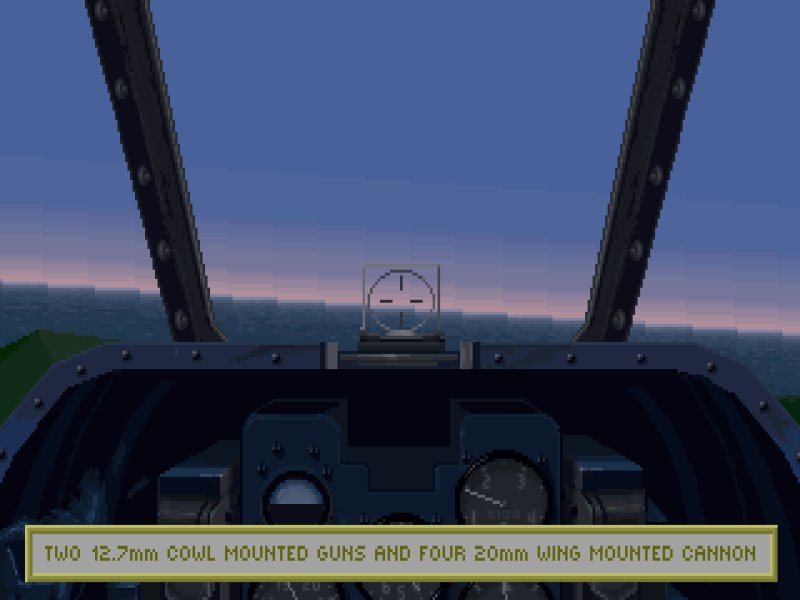
Make sure all your weapons are active before an interception.
However, the best glitch was the ending of one of the Japanese Navy Zero careers. The last mission was supposed to be a nighttime raid. It's an utterly terrible mission, because you cannot see anything. I ended up flying blind, hoping not to get shot. I got no kills and almost no points. But for some reason, the career didn't end there. DOSBox threw a null pointer error, and my pilot remained active. So I continued flying, six more unique missions I never encountered before, until finally, the game decided to retire me. I finished with an absurdly high score and tally of dogfight kills, but hey. When a game gives you glitches ...

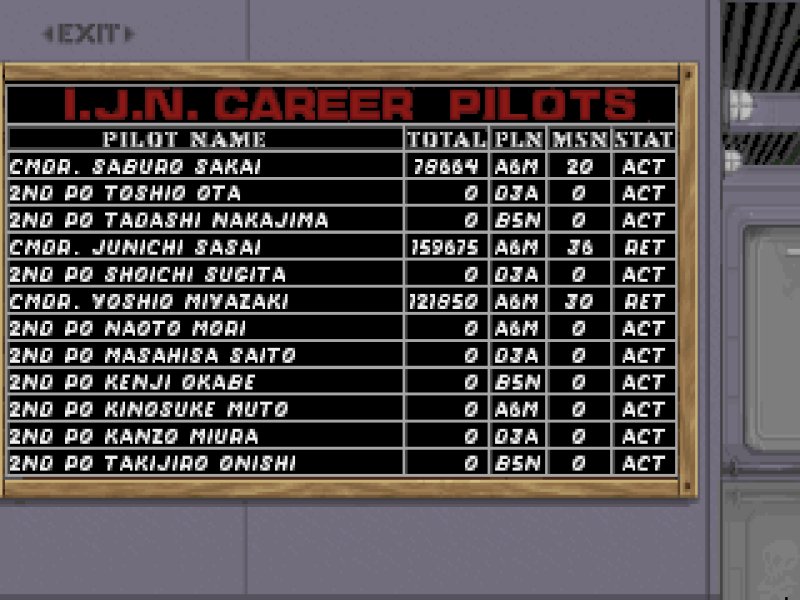
A pilot with 36 missions. Shouldn't have happened. Uncharted territory.
The fun
Ultimately, 1942: PAC is all about fun. And fun I had. Tons and tons of it. Every plane is unique, with its own cockpit and, most importantly, handling. The P38 and P40 and P51 and Tony and all the rest of them all have different roll rates, climb rates, maximum speed, weaponry, and armor. The twin-boom Lightning has no engine torque, while all the rest do, and you need to trim to keep flying straight. The American planes have radios, whereas the Japanese ones do not.
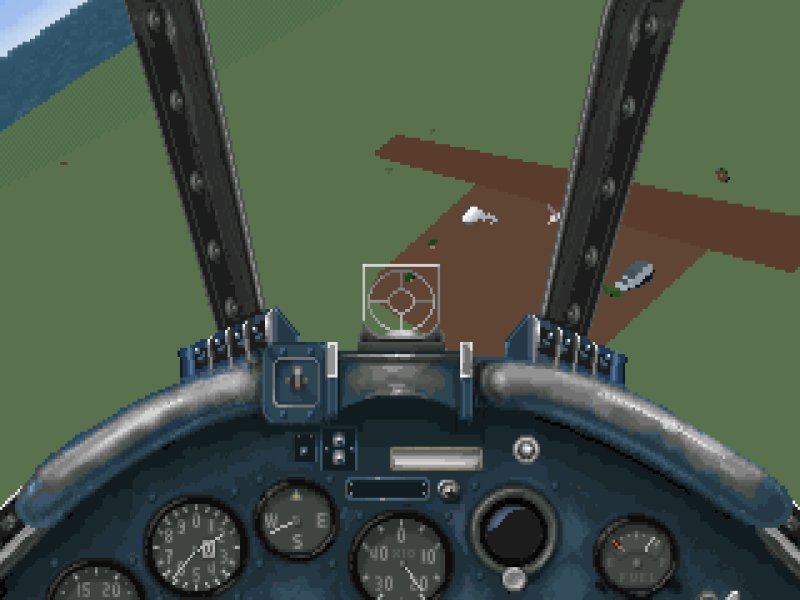
Strafing a base, ignoring the sounds of AA guns all around.
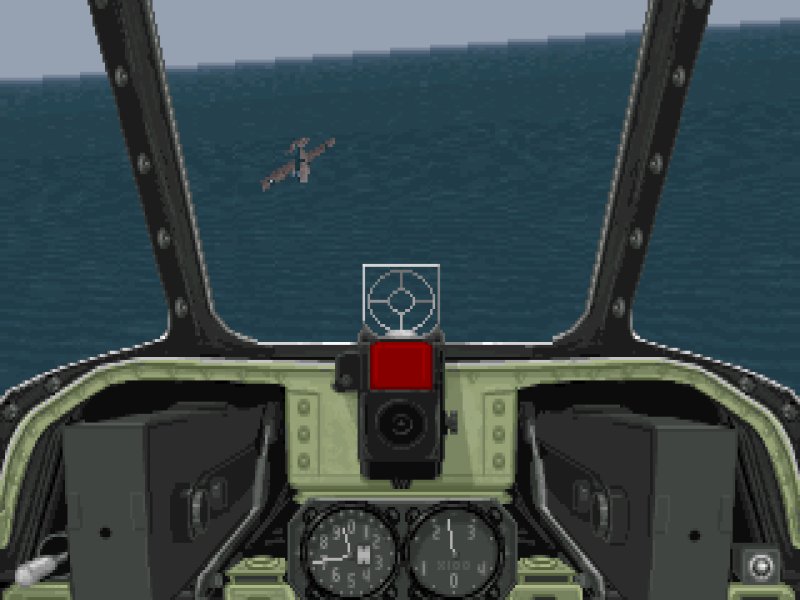
A Catalina going down, after being shot down. By me.
You do need to use the aircraft's qualities for best effect. Those with heavy guns can render tremendous damage at range in head-on passes. Those with limited weaponry need to get funky in tight dogfights. As a rule, the Japanese planes have lighter wing loading, and they are far more agile. The only exception is the Mustang, which comes with exceptional handling, but the in-game version only has four 50-cal guns rather than six. If you're flying a George, you usually do not need to worry about anyone being fast enough to get on your back, and the Corsair or the P38 will make for frustrating long-winded chases, especially if they decide to dive. Zero remains remarkably useful, no matter who you fly it against.
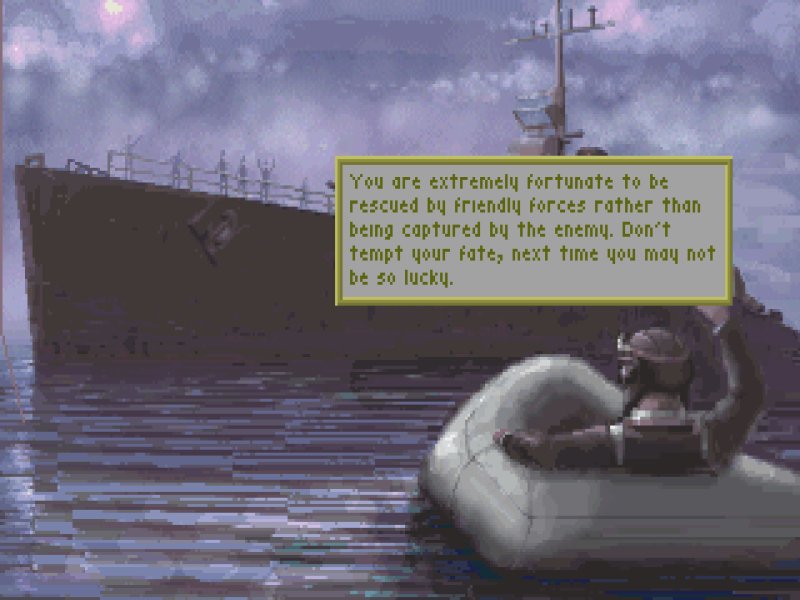
Usually, bailing out is risky business. You may die, or get captured.
I really enjoyed the Warhawk, as it exhibits good response even at low speeds. Whereas most other planes stall, the P40 sort of limps along nicely, and you can use it to turn in with the faster foe, eventually ending up behind them. Don't expect any high-speed magic. The Lightning climbs superbly. The Tony has a dazzling array of four 20mm cannon and two 7.7mm machine guns, making combat quick and deadly.
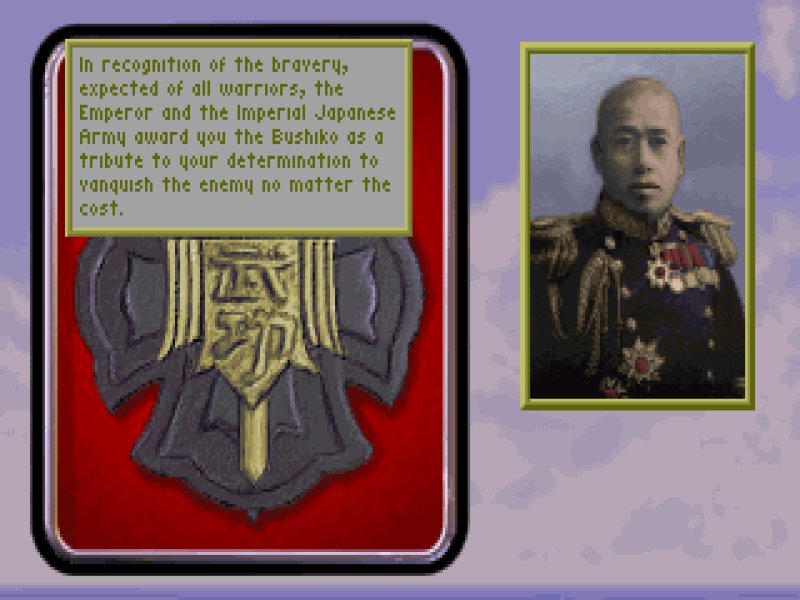
You get the "top" medal if you exceed 6,000 points - Bushiko for the Japanese, Congressional Medal of Honor for the Americans. Usually, this means shooting down at least 7-8 planes, 9+ to be on the safe side. Not all missions offer this, so there's an element of luck, too.
If my memory serves me well, I used to be terrified of flying the Wildcat, as it was slow and sluggish. But this time around, I found the USN career remarkably easy. Too easy, in fact, for some reason. Perhaps my skills have improved, but there was none of the teeth-gnashing I recall from the 90s. I didn't replay any bomber careers, but back then, I did manage a 61-kill streak with an SBD/SB2C once, if my memory serves me well. I didn't have the stamina for the challenge this time around. At least, not yet.
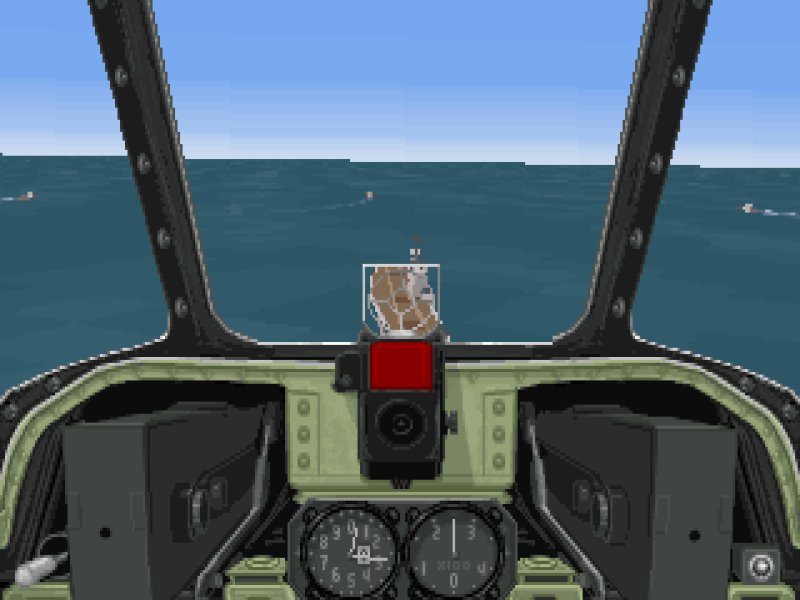
A landing approach or a daring bombing run?
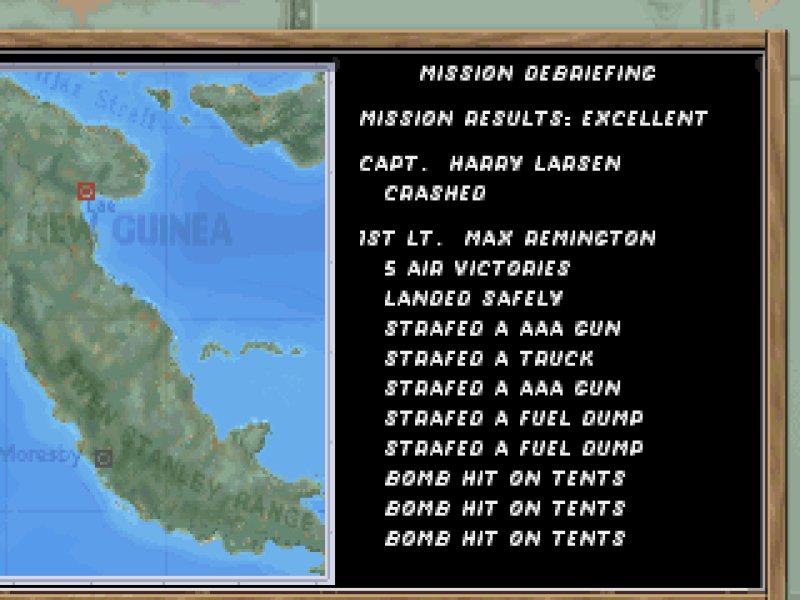
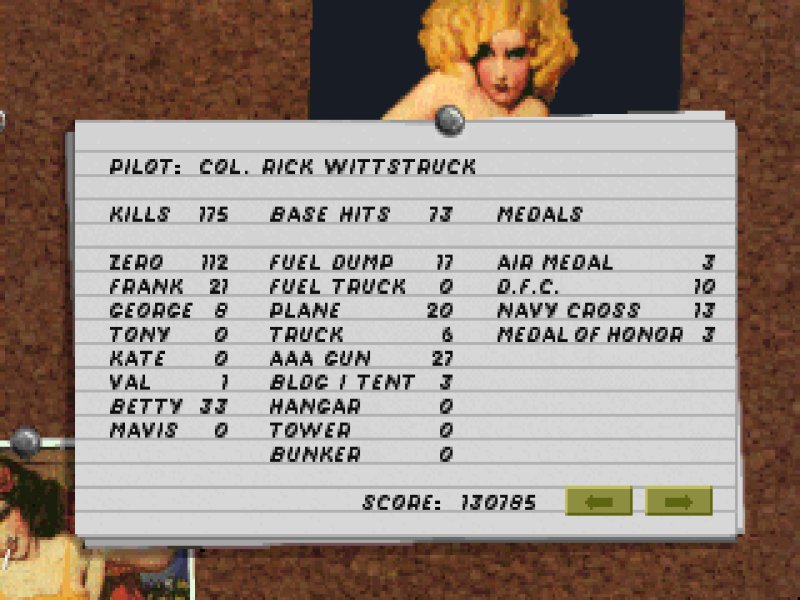
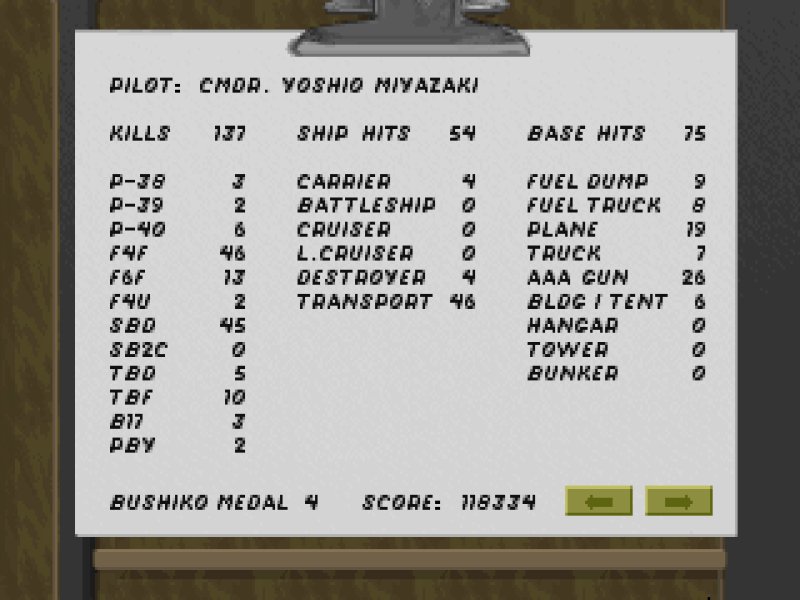
I managed to get as many as four Bushikos in two separate Japanese careers.
With game sounds properly sorted, it's a joy playing. You even get a semblance of 3D noise, and you can cue in where the gun firing comes from, behind you, to your left or right. If you switch into the external view while flying over an enemy fleet, there will be a blood-curdling racket of AA. With digital sounds on, it's muted inside the cockpit, though. In the 90s, I still remember the unholy screeches of flak explosions, making airfield runs extremely intimidating. Now, I found the exercise almost relaxing, although I did get my engine shot through once or twice, and I had to limp back to base wrapped in smoke. The engine overheating noise sounds like sizzling, boiling water (or oil) inside metal pipes. Beautifully done. And you cannot rev your engine to 100% too many times before you permanently damage it. You really have to be careful with the throttle. Another gem of thought and game design.
Conclusion
And soon, in a flurry of dogfights, one after another, nine careers went by, with 276 missions completed, six of those which never should have happened. Phenomenal. A game released in 1994 offers so much good, fresh, timely fun. Sure, you may call my impressions naive, my yearning foolish, and consider the DOS-era graphics silly, but this humble title offers a more complete gaming experience than 99% of stuff released today with one million times more data or budget. Just like the F-16: Combat Pilot, the size doth not matter. A game the size of a (short) MP3 song comes with a whole world of innovation, realism and replayable joy. It's clever, wicked, fantastic.
If you're a fun of simulation, give 1942: The Pacific Air War a try. It's available on Steam and GOG, if I'm not mistaken, and you can try my tweaks to get the performance and sound sorted. If you happened to have played this title back when it was released, perchance my review will evoke a nugget of positive emotions, perhaps even spur you to dust off the old catalog and give it a go. Yes, I still keep the original game manual in a box. Yes, I'm that kind of nerd. Well, that was all I had to say today. From your favorite dinosaur, peace out.
P.S. If you want to learn how to nicely resize DOSBox screenshots, my tutorial might help.
Cheers.